How to Jump Start a Car by Yourself: 2026 Guide
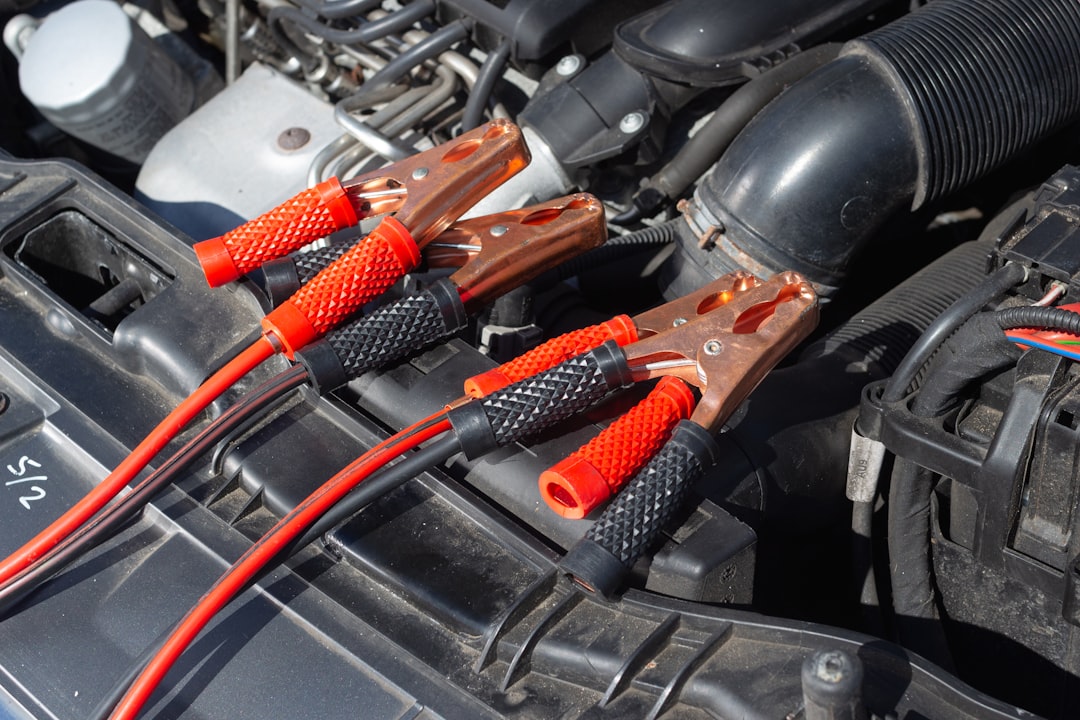
You walk out to your car, turn the key, and hear nothing but a hollow click — or total silence. A dead battery is one of the most common roadside headaches, and it almost always strikes at the worst possible moment. The good news is that knowing how to jump start a car by yourself is a skill you can master in minutes. Whether you have a set of jumper cables and a willing neighbor or a compact portable jump starter tucked in your glove box, this guide covers every step — and every pitfall — so you can get back on the road safely.
What You Need Before You Start
Before touching anything under the hood, gather the right equipment. At minimum, you'll need either a set of jumper cables and a second vehicle with a charged battery, or a portable jump starter (also called a jump pack or booster pack).
- Jumper cables: These are not standard equipment in most vehicles, so you'll need to buy a set and keep them in your trunk. A new set typically costs between $20 and $80. Look for cables that are at least 10–12 feet long so you can reach between two vehicles parked in different configurations. Heavier gauge cables (4–6 gauge) provide a better, more reliable connection.
- Portable jump starter: These self-contained lithium battery packs let you jump start a car entirely on your own — no second vehicle required. Most modern lithium models are small enough to fit in a glove box but powerful enough to start an SUV. Prices range from under $40 to nearly $300 for premium units. Most jump starters also include a built-in LED flashlight and USB ports to charge your phone during a breakdown.
- Safety gear: Keep a pair of rubber or nitrile gloves and safety glasses with your cables. Remove all jewelry — especially rings and watches — before working near a battery, since conductive metals near a terminal can cause a shock or severe burn.
Always check your owner's manual before proceeding. Some newer vehicles, including many hybrids and EVs, have dedicated jump-start terminals under the hood rather than direct battery access, and some manufacturers advise against jump-starting altogether to protect the warranty.
Method 1: How to Jump Start a Car Using Jumper Cables and a Second Vehicle
This is the traditional approach. Follow every step in order — the sequence is not arbitrary. It is specifically designed to prevent dangerous sparks near the battery.
- Position the vehicles. Park the car with the good battery close to the dead one — nose-to-nose or side by side — so the cables can reach both batteries comfortably. The cars must be close enough for the cables to span the gap, but the vehicles themselves must never touch each other. Even brief contact between the two car bodies can create an unintended electrical path between them, causing unpredictable current flow and potential sparks.
- Turn everything off. Shut off the ignition on both cars and remove the keys. Engage the parking brake on both vehicles. Turn off all accessories — headlights, radio, climate control, phone chargers — on both cars. Any running accessory draws power that should be going toward starting the dead battery.
- Inspect both batteries. Open both hoods and locate the batteries. Check them quickly for cracks, leaks, or visible damage. Never attempt to jump start a cracked, leaking, or visibly damaged battery — it can explode. If the battery terminals are coated with a white or greenish powdery substance (corrosion), clean them off with a wire brush or aluminum foil before clamping on. Do not use your bare hands — corrosion can irritate skin. Also, never try to jump start a frozen battery; the gases trapped inside expand rapidly when charged, creating a serious explosion risk.
-
Connect the cables in the correct order. This step is the most critical. Connecting in the wrong order or reversing the polarity can fry both vehicles' electrical systems — including the ECU, airbag sensors, and alternator — and create dangerous sparks near flammable battery gases. Here is the correct sequence:
- Clamp the RED (positive) cable to the positive (+) terminal on the DEAD battery.
- Clamp the other RED end to the positive (+) terminal on the GOOD battery.
- Clamp the BLACK (negative) cable to the negative (–) terminal on the GOOD battery.
- Clamp the other BLACK end to a clean, unpainted metal surface on the engine block or chassis of the DEAD car — NOT to the negative terminal of the dead battery. Grounding the final clamp to bare metal rather than the dead battery's terminal keeps sparks well away from the battery and virtually eliminates the risk of igniting the hydrogen gas batteries naturally emit.
- Start the donor car. Start the vehicle with the good battery and let it run for one to two minutes. You can gently rev the engine slightly to push more charge toward the dead battery.
- Attempt to start the dead car. Try to start the car with the dead battery. It may take a couple of attempts. If it does not start after three or four tries, stop — repeatedly cranking can damage the starter or electrical system. Wait another minute or two with the donor car running, then try again. If the car still will not start, the battery may be too far gone or there may be a deeper mechanical issue.
-
Disconnect the cables in reverse order. Once the jumped car is running, remove the cables carefully in exactly the opposite sequence you connected them:
- Remove the black clamp from the grounded metal surface of the jumped car.
- Remove the black clamp from the negative terminal of the good battery.
- Remove the red clamp from the positive terminal of the good battery.
- Remove the red clamp from the positive terminal of the jumped car's battery.
- Drive to recharge the battery. After a successful jump, drive the vehicle for at least 20 to 30 minutes — ideally on the highway rather than stop-and-go traffic. When idling in a parking lot, the alternator barely charges the battery. Driving at higher RPMs causes the alternator to spin faster and generate significantly more charge. Minimize the use of power-hungry accessories like air conditioning and heated seats during this recharge window.
Method 2: How to Jump Start a Car by Yourself with a Portable Jump Starter
A portable jump starter is the best tool for truly solo jump-starting. Modern lithium packs include spark-proof technology and reverse polarity protection — if you hook the clamps up incorrectly, the device simply will not activate, protecting your car's electronics. Here is how to use one:
- Check the pack's charge level. A portable jump starter is useless if it has not been charged. Check the battery indicator before you need it, and top it off every three to four months. Most lithium-ion units can hold a charge for six to twelve months when stored in a cool, dry place.
- Turn off the ignition and all accessories in your car, and set the parking brake.
- Connect the red clamp to the positive (+) terminal of your dead battery.
- Connect the black clamp to an unpainted metal surface on the engine block or chassis — away from the battery, fuel lines, and moving parts. Some manufacturers allow connecting directly to the negative terminal; check your jump starter's manual.
- Turn on the jump starter (if it has a power switch) and wait a moment for the charge to flow.
- Start the car as you normally would. If it does not start on the first try, wait a minute and try again.
- Disconnect in reverse order: black clamp first, then the red clamp. Turn off the jump starter before or immediately after disconnecting.
- Drive for 20–30 minutes to let the alternator recharge your car's battery, then recharge the jump starter at home so it is ready for next time.
For a comprehensive comparison of the best portable jump starters currently on the market, TechGearLab's 2026 lab-tested rankings are a reliable reference point.
The Most Dangerous Mistakes to Avoid
Jump-starting a car is straightforward when done right — but costly and potentially dangerous when done wrong. Here are the most common errors and how to avoid them:
- Reversing the polarity. Connecting red to negative or black to positive is the single most dangerous mistake you can make. It can instantly destroy both vehicles' alternators, ECUs, and onboard computer systems — and it creates sparks near highly flammable hydrogen gas, with the risk of a battery explosion that can cause severe burns, eye injuries, and permanent scarring.
- Connecting the final black clamp directly to the dead battery's negative terminal. Always ground the last clamp to unpainted metal on the engine block or chassis instead. This keeps any spark far from the battery and its gases.
- Letting the two cars touch. Even light contact between the vehicles creates an unintended electrical path through their metal frames, bypassing the controlled circuit you've set up and risking damage to both grounding systems.
- Trying to jump a damaged or frozen battery. A cracked or leaking battery can explode when you try to charge it. A frozen battery is equally dangerous — the gases trapped inside expand rapidly under a charge.
- Using cheap or worn-out cables. Thin, low-quality cables have high resistance, overheat, and may not conduct enough current to start the car. Invest in heavy-gauge cables with thick insulation and strong clamps.
- Using a mismatched voltage source. Most passenger cars run on a 12-volt system. Never attempt to jump start a standard car using a 24-volt truck battery — the voltage mismatch can cause immediate electrical damage.
- Skipping the post-jump drive. Shutting off the engine right after a jump is one of the most common mistakes — the alternator has not had time to restore the battery's charge, and the car will likely die again within minutes.
- Ignoring a repeatedly dead battery. If you need to jump start your car frequently, the battery itself may be at the end of its life (most last three to five years), or there may be a faulty alternator or a parasitic electrical drain that needs a mechanic's attention.
For more detail on avoiding cable-connection errors, Kelley Blue Book's jump-start guide is an excellent, regularly updated reference. The AA's official advice on using jump leads is another authoritative source, particularly for understanding grounding points.
Special Cases: Hybrids, EVs, and Hard-to-Find Batteries
Not every vehicle jump-starts the same way. Hybrids carry two batteries: a standard 12-volt auxiliary battery (which can die just like a conventional car's) and the larger high-voltage pack that powers the electric motor. Many hybrid manufacturers have placed the 12-volt battery in an unusual location — sometimes in the trunk or under a rear seat — and may provide dedicated jump-start tabs under the hood instead. Always consult your owner's manual for hybrids before doing anything.
For electric vehicles, you cannot jump start one EV using another EV's battery. If a 12-volt auxiliary battery in an EV is discharged, use a gas-powered donor car or a portable jump starter. Avoid using a hybrid or EV as the donor vehicle for a conventional car jump unless the owner's manual for that specific hybrid explicitly permits it — doing so can cause damage to the hybrid's sensitive electronics.
AutoZone's comprehensive jump-start DIY page covers alternative methods including battery chargers if you have more time and access to a power outlet.
After the Jump: What to Do Next
A successful jump start does not mean your battery problem is solved. Think of it as a temporary fix. Once you are back on the road, take these steps:
- Drive, don't idle. Highway driving at sustained RPMs gives the alternator the best conditions to recharge the battery. Avoid making multiple short stops immediately after a jump — constant starting and stopping drains the battery faster than the alternator can refill it.
- Watch the dashboard. If the battery warning light stays on after a jump, the alternator may not be charging properly and needs professional attention.
- Get the battery tested. Most auto parts stores will test your battery for free. If the battery is more than three years old and has died once, it may be nearing the end of its service life.
- Consider a trickle charger. If your car sits unused for long periods, a trickle charger can maintain the battery's charge level and significantly extend its lifespan.
FAQ
Can I really jump start a car completely by myself?
Yes — the easiest solo method is to use a portable jump starter (also called a jump pack or booster pack). These self-contained lithium battery devices connect directly to your car's battery without needing a second vehicle. If you only have jumper cables, you can still do it alone if you have a second car of your own parked nearby, but you'll need to move between the two vehicles to connect the cables and then start each car.
What is the correct order to connect jumper cables?
Always follow this sequence: (1) Red clamp to the positive terminal of the DEAD battery; (2) Red clamp to the positive terminal of the GOOD battery; (3) Black clamp to the negative terminal of the GOOD battery; (4) Black clamp to an unpainted metal surface on the engine block or chassis of the DEAD car — never directly to the dead battery's negative terminal. Disconnect in exact reverse order once the dead car is running.
How long should I drive after jump starting my car?
Drive for at least 20 to 30 minutes, ideally on the highway rather than stop-and-go city streets. At higher RPMs, the alternator spins faster and generates more charge. Simply idling in a parking lot provides very little charging current. Avoid using power-hungry accessories like air conditioning during this recharge period.
Is it safe to jump start a hybrid or electric vehicle?
It depends on the specific make and model. Most hybrids have a standard 12-volt auxiliary battery that can be jump-started, but the battery's location and the correct connection points vary — always check the owner's manual first. For EVs, never use a second EV as a donor; use a gas-powered car or a portable jump starter instead. Avoid using a hybrid or EV as the donor vehicle unless the manual explicitly says it's safe to do so.
Sources
- How to Jump Start a Car in 6 Steps – Kelley Blue Book
- How to Jump Start a Car by Yourself – AutoZone
- How to Jump a Car Battery Safely – Your AAA Network
- How to Jump Start a Car in 9 Steps – The AA
- How to Jump-Start a Car by Yourself – SoFi
- 5 Mistakes People Make When Jump Starting a Car Battery – Rocky Ford Discount Tire
- Why a Portable Jump Starter is Your Best Friend – Batteries Plus
- Best Jump Starters of 2026 – TechGearLab
- How to Use a Portable Jump Starter – AutoZone
- How Long Should a Car Run After Getting a Jump? – J.D. Power
- How Long Should You Leave Your Car Running After A Jump Start? – Jalopnik
- DIY – How to Jump a Car Battery – Cars.com